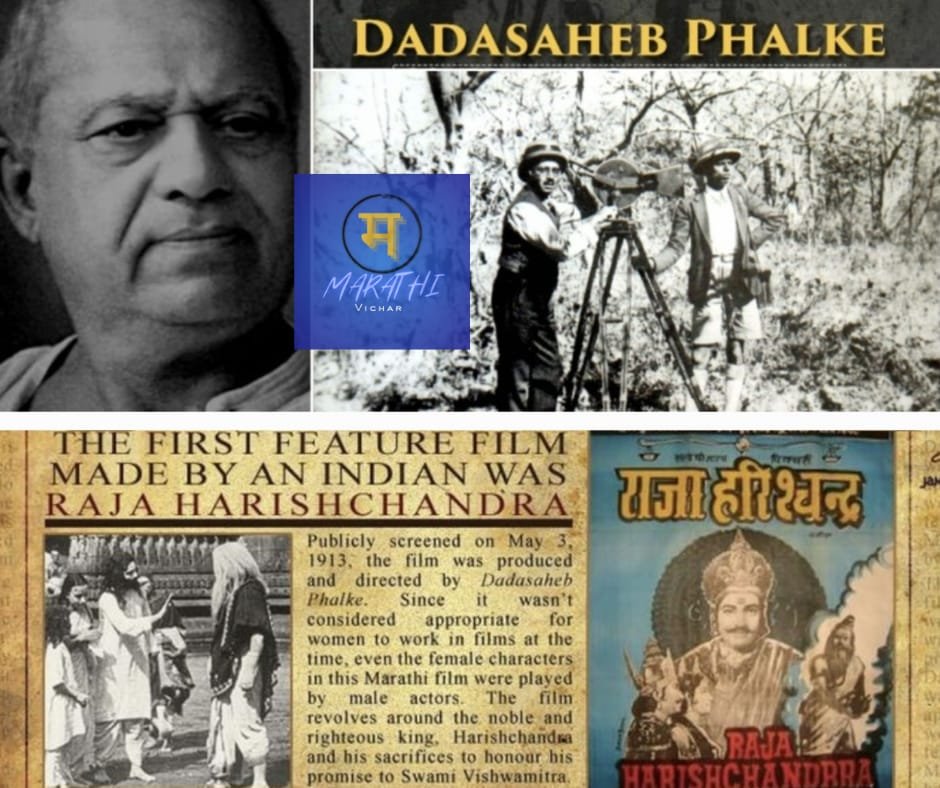
Over 113 years ago, Indian cinema began its remarkable journey with Raja Harishchandra, the first full-length Indian feature film, created by the legendary pioneer of filmmaking, Dadasaheb Phalke.
Inspired after watching The Life of Christ at a theatre in Bombay in April 1911, Phalke became determined to create motion pictures in India. To master the craft, he travelled to London and spent two weeks studying filmmaking techniques. Upon returning to India, he established the Phalke Films Company and began work on what would become a historic cinematic milestone.
The filmmaking equipment for the project was imported from England, France, Germany, and the United States — a remarkable achievement during that era.
To attract investors and generate confidence in cinema as a new medium, Phalke first created a short experimental film titled Ankurachi Wadh (“Growth of a Pea Plant”). The short film successfully helped him raise interest and support for the ambitious feature film he envisioned.
Casting the film, however, proved difficult. In those days, women were unwilling to act in films due to strong social stigma. Despite publishing advertisements in newspapers seeking actors and crew members, no women responded. As a result, male actors performed female roles in the movie.
Phalke himself handled nearly every aspect of production — screenplay, direction, production design, makeup, film editing, and even film processing. The cinematography was managed by Trymbak B. Telang.
The making of Raja Harishchandra took six months and 27 days. The completed film measured 3,700 feet (1,100 metres), spread across four reels.
The film premiered at the Olympia Theatre in Bombay on 21 April 1913 and was officially released on 3 May 1913 at the Coronation Cinematograph and Variety Hall in Girgaon.
Raja Harishchandra became a major commercial success and laid the foundation of the Indian film industry — what would later evolve into today’s massive multibillion-dollar entertainment industry popularly known as Bollywood.
Although often associated with Hindi cinema, India’s first feature film was actually a Marathi silent film. It remains one of Maharashtra’s greatest cultural contributions to Indian art and cinema.
To honour Phalke’s immense contribution, the Government of India instituted the prestigious Dadasaheb Phalke Award, the highest award in Indian cinema, presented annually for lifetime contribution to filmmaking.
Sadly, much of the original film has been lost over time. Only the first and last reels survive today and are preserved at the National Film Archive of India.
The Government of India officially recognizes Raja Harishchandra as the first Indian feature film — a timeless landmark that marked the birth of Indian cinema.
– Pearl Misquita