The 79th Cannes Film Festival 2026 was especially significant for us here in Maharashtra — and here’s why.
For the first time in the history of the festival, eminent personalities from the Marathi film industry walked the red carpet shoulder to shoulder with globally celebrated icons, proudly representing Maharashtra on one of cinema’s grandest stages.
Key Highlights
Several Marathi films were screened in the Regional Cinema category, including:
JEEV – The Creature
Directed by Ravindra Jadhav, the film explores the customs and traditions of the Konkani tribal community.
April May 99
Directed by Rohan Mapuskar, this film beautifully captures nostalgia, friendship, and first love.
Juna Furniture
Mahesh Manjrekar’s poignant film sheds light on the emotional realities and struggles faced by senior citizens within families.
Sthal
A rural Indian narrative addressing patriarchy, arranged marriage traditions, and colourism.
Snow Flower
Directed by Gajendra Ahire, this cross-cultural feature bridges the landscapes and emotions of Siberia and Konkan.
The OTT platform ABHIJAT MARATHI also made its global debut at the festival this year. The platform aims to showcase Marathi cinema, AI-based storytelling, and web series to an international audience and diaspora.
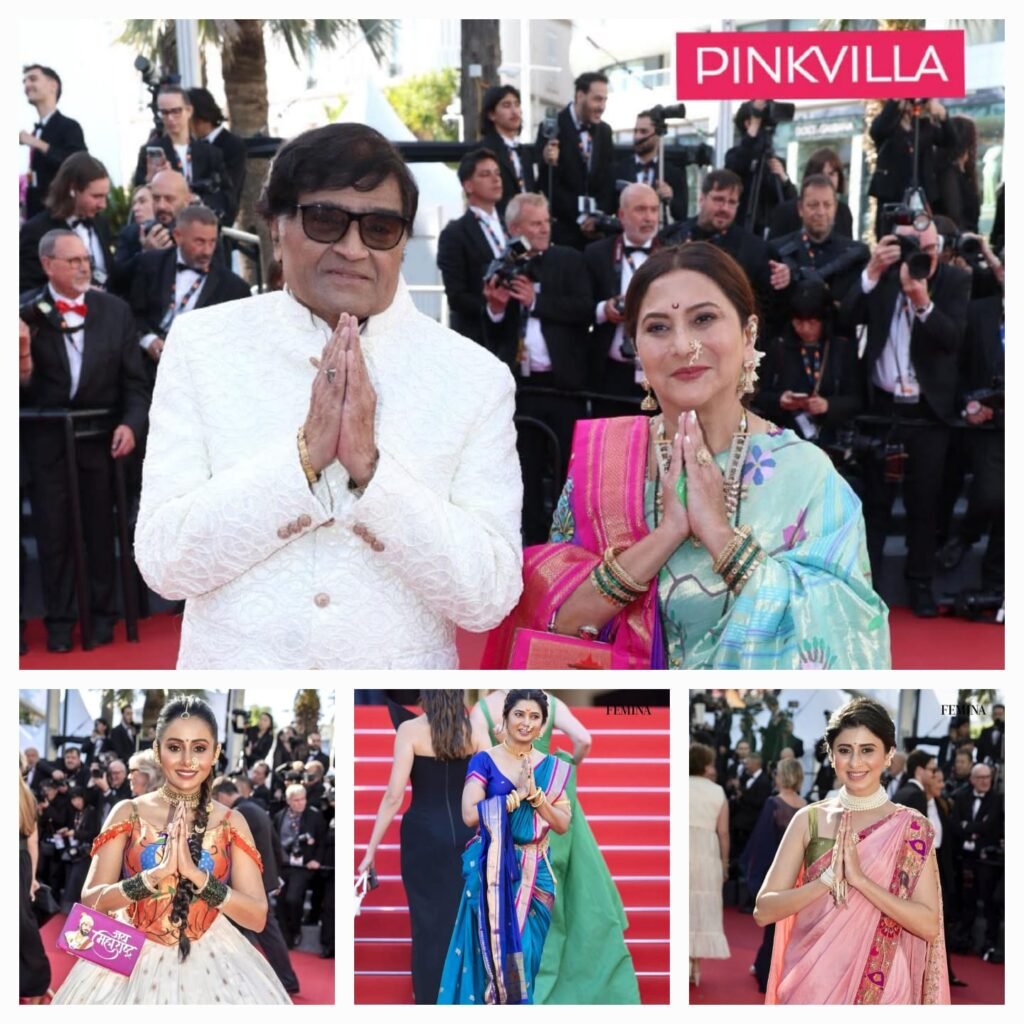
Leading Maharashtra’s contingent was veteran actor Sachin Pilgaonkar alongside his wife, actress Nivedita Saraf. Prajakta Mali, Ankita Prabhu Walawalkar, Anita Waghdhare, along with Raju and Kedar Joshi, also graced the red carpet.
What made this moment even more special was the conscious choice to celebrate Maharashtrian heritage through traditional attire rather than conventional Western red-carpet fashion.
From the exquisite Paithani — often called the “Queen of Silks” with its iconic peacock and lotus motifs adorning the pallu — to the timeless Kolhapuri chappals, now even admired by luxury fashion houses such as Prada, Maharashtra’s cultural identity stood proudly on the global stage.
The Nauvari sari itself carries deep historical significance. Designed to function almost like trousers, it was worn by warrior women to allow mobility during horseback riding and battle. It symbolizes grace, resilience, modesty, and strength — qualities deeply rooted in the legacy of the Maratha Empire.
History bears witness to the courage and intellect of Maharashtrian women, many of whom fought fearlessly on battlefields and led from the front with extraordinary strength of character.
Rajmata Jijabai, mother of the great Chhatrapati Shivaji Maharaj, played a defining role in shaping the ideals of Swaraj. Her vision, determination, and values laid the foundation for a movement that changed Indian history forever.
For every Maharashtrian, it was a moment of immense pride to witness our culture, traditions, and heritage shining brightly on the French Riviera.
Amidst the Cartiers and Bulgaris of the world, our pearl-encrusted nath and elegant kamarbandh found their own rightful place to sparkle with dignity and grace.
This moment proves that Maharashtra is globally recognized not only as the home of Mumbai — India’s financial capital — but also as a treasure trove of art, history, culture, and timeless traditions.
Maharashtra has always been a progressive state. Established through the vision and courage of Chhatrapati Shivaji Maharaj, its living legacy continues to place Maharashtrian identity firmly on the world map, evoking pride in every loyal Maharashtrian — by birth or by choice.
This recognition once again demonstrates that Maharashtrian culture transcends borders and generations.
Rich. Timeless. Relevant — today and beyond.
— Pearl Misquita
Source of images: @femina and @pinkvilla